Building Strong Habits and Curious Minds
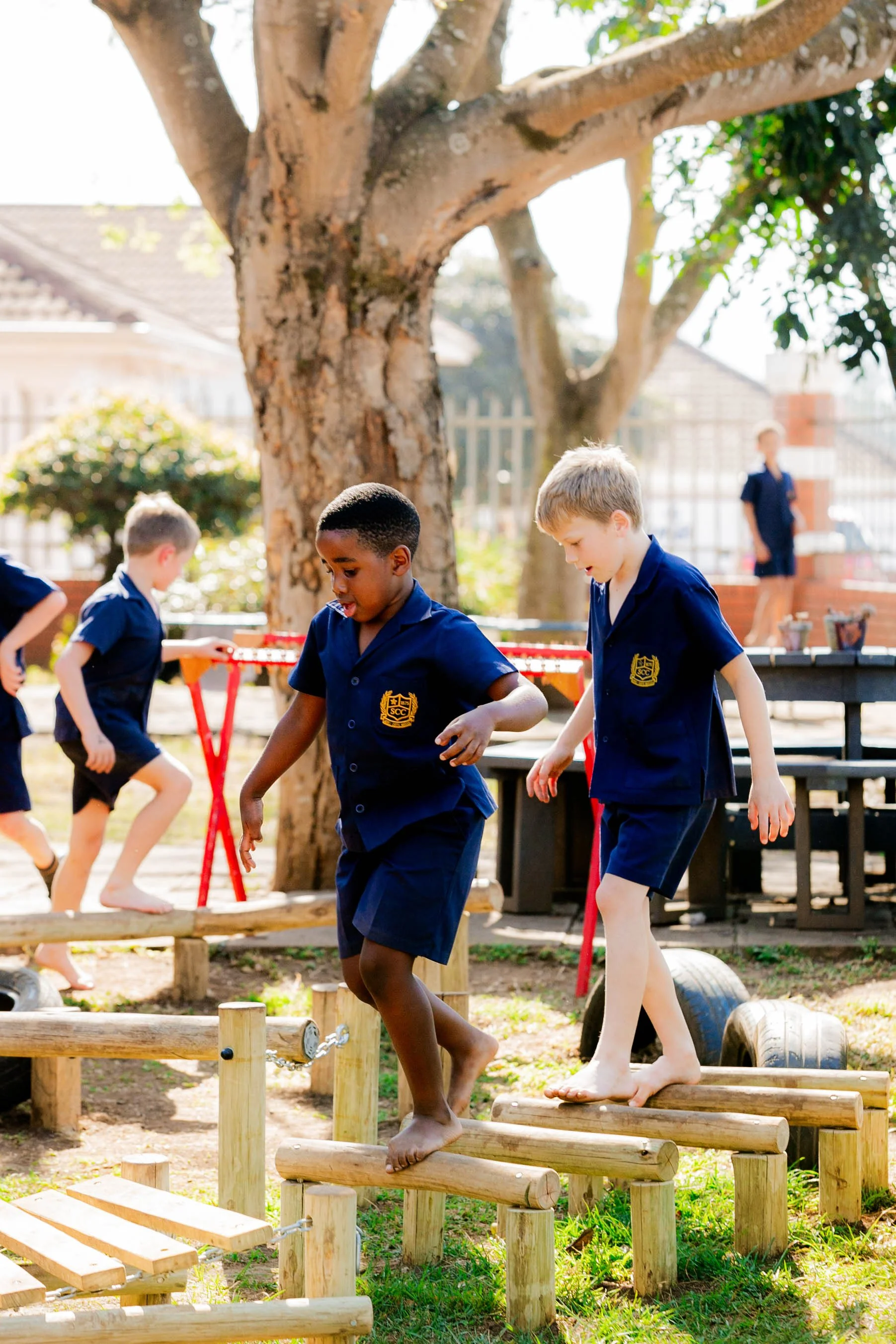
Walk past any playground and you'll see it: a parent's breath catching as a small figure scrambles a little too high, or wobbles along a wall a little too narrow. It's one of the most familiar feelings in parenting, and as Lauren Riley, our Head of Junior Primary at St Charles College, sees it, one worth pausing on.
With years of experience and spent watching young boys learn through movement, play and everyday risk, Lauren shared the following in her bi-termly educational newsletter:
"Let Them Climb"
It is perfectly normal to feel a jolt of fear when you see a child climb a little too high or balance on an uneven edge. Our instinct is to protect children from every bump and bruise because we care deeply about their safety. But sometimes, in our efforts to keep children safe, we accidentally get in the way of their development.
Every time a child climbs, balances, jumps or navigates a risk, their brain is developing coordination, balance, body awareness and judgement. Through movement, children learn not only what their bodies can do, but also how to assess risk for themselves.
Perhaps we are sometimes worried about the wrong things. We fear scraped knees and muddy clothes while overlooking a quieter concern: children are moving less than ever before. Running, climbing, balancing, wrestling, falling, and trying again help build resilience, confidence, coordination and emotional regulation. These experiences are not a threat to development - they are a vital part of it.
Real safety is not removing every risk. It is helping children become capable, aware and confident in their own bodies.
Where will you put your foot next? What is your plan from there? What could you hold onto? Do you feel in control? These questions encourage children to assess risk, solve problems, and trust their own judgement.
We won't prevent every fall today, but we can equip children with the skills to navigate the challenges of tomorrow.
"Children need opportunities for active play with acceptable levels of risk to develop physical competence, self confidence and the ability to assess and manage risk."